27 million women.
43,000 deaths.
Once every 12 minutes.
Burden of postpartum haemorrhage
27M
Women every year
17M
Vaginal births
10M
Caesarean births
25%
of maternal deaths
43K
Deaths a year
Most of these deaths are preventable.
Unequal burden of PPH
About 90% of deaths occur in two main regions: sub-Saharan Africa (around 74%) and central and southern Asia (about 16%) [1]. The case fatality can be more than 200 times higher in low- and middle-income countries when compared to high-income countries, primarily due to factors such as untreated anaemia, no access to quality drugs, unavailability of blood transfusion facilities, and lack of timely escalation and referral pathways [1].
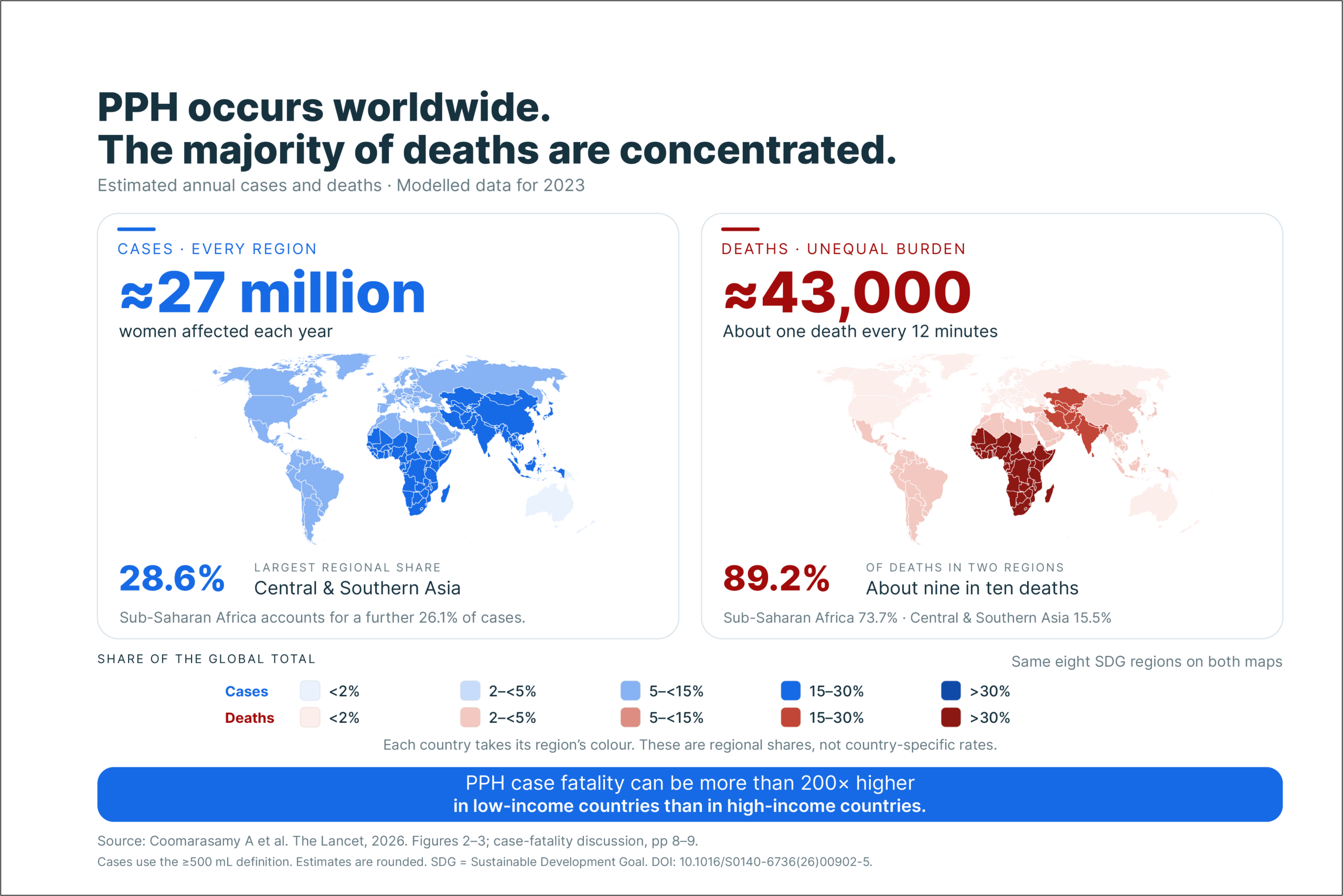
Modelled estimates for 2023 · Lancet PPH Series, Paper 1
The cost
Postpartum haemorrhage costs countries, health systems, and families approximately US$10.4 billion annually [1]. The burden of emergency surgery, need for blood transfusion, intensive care, lost economic output, and extended recovery hit the hardest on those economies with the least capacity to absorb these costs. This underscores that prevention, early detection and treatment of postpartum haemorrhage using an evidence-based treatment bundle are the priority in low- and middle-income countries [1].
The lasting impact of postpartum haemorrhage
Survival following postpartum haemorrhage does not mark the end of its clinical implications. Severe anaemia is a serious consequence: about 46% of survivors are left anaemic after childbirth, which can hamper recovery and reduce the woman’s ability to return to routine life [1]. The other consequences of postpartum haemorrhage include, emergency hysterectomy, organ failure, and long-term psychological trauma [1]. While the number of deaths highlights part of the burden, it underestimates the ongoing impact on survivors and their families.
Why women die from PPH – Four missed opportunities
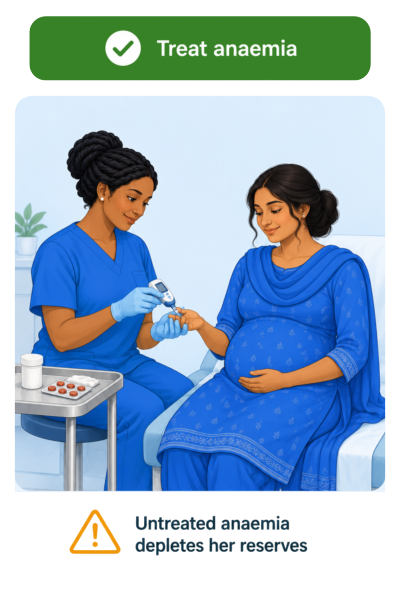
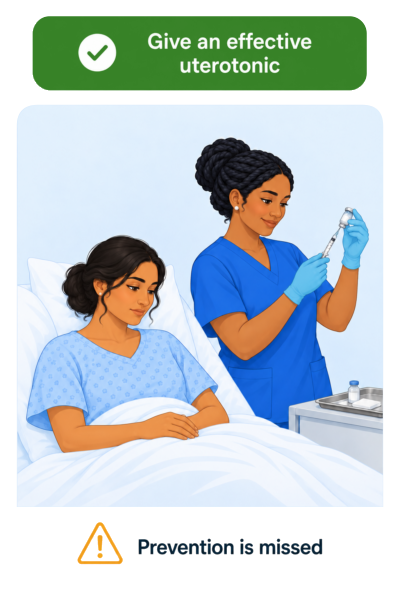
A woman with untreated anaemia goes into labour. After labour, her blood loss is visually underestimated and recorded as normal. As her pulse increases, treatment starts gradually, with each intervention arriving after the previous one at variable time intervals.
Her journey intersects four critical points.
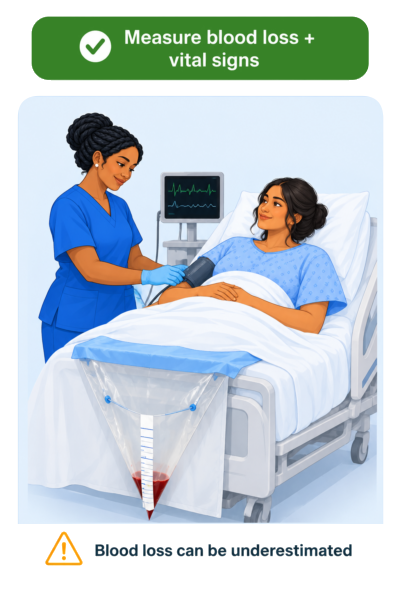
3 AFTER LABOUR
Now: Her blood loss is estimated and recorded as normal. Her pulse is rising, but with no clear threshold, the team watches and waits.
4 PPH RESPONSE
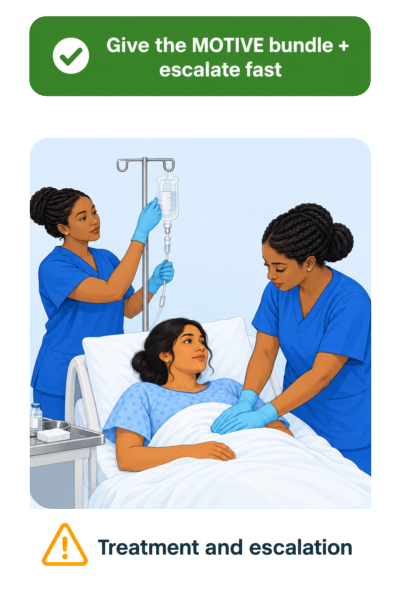
Now: Treatment starts gradually: one intervention at a time, each arriving a little too late, compounding the blood loss.
Intervention: A bundled first response, uterine massage, uterotonics, tranexamic acid, intravenous fluids and examination for the cause, started together, so treatment is never behind the bleeding [3].
We now have the evidence to change the outcome
The following pages present evidence on resolving the current limitations in PPH detection and treatment for healthcare systems:
- Prevention of postpartum haemorrhage before labour, measuring blood loss objectively following vaginal birth, trigger criteria for initiating first response to postpartum haemorrhage, escalation when initial measures fail.
- Robust evidence supporting this: the key E-MOTIVE trial involved 80 hospitals across Kenya, Nigeria, South Africa, and Tanzania [1] [3].