
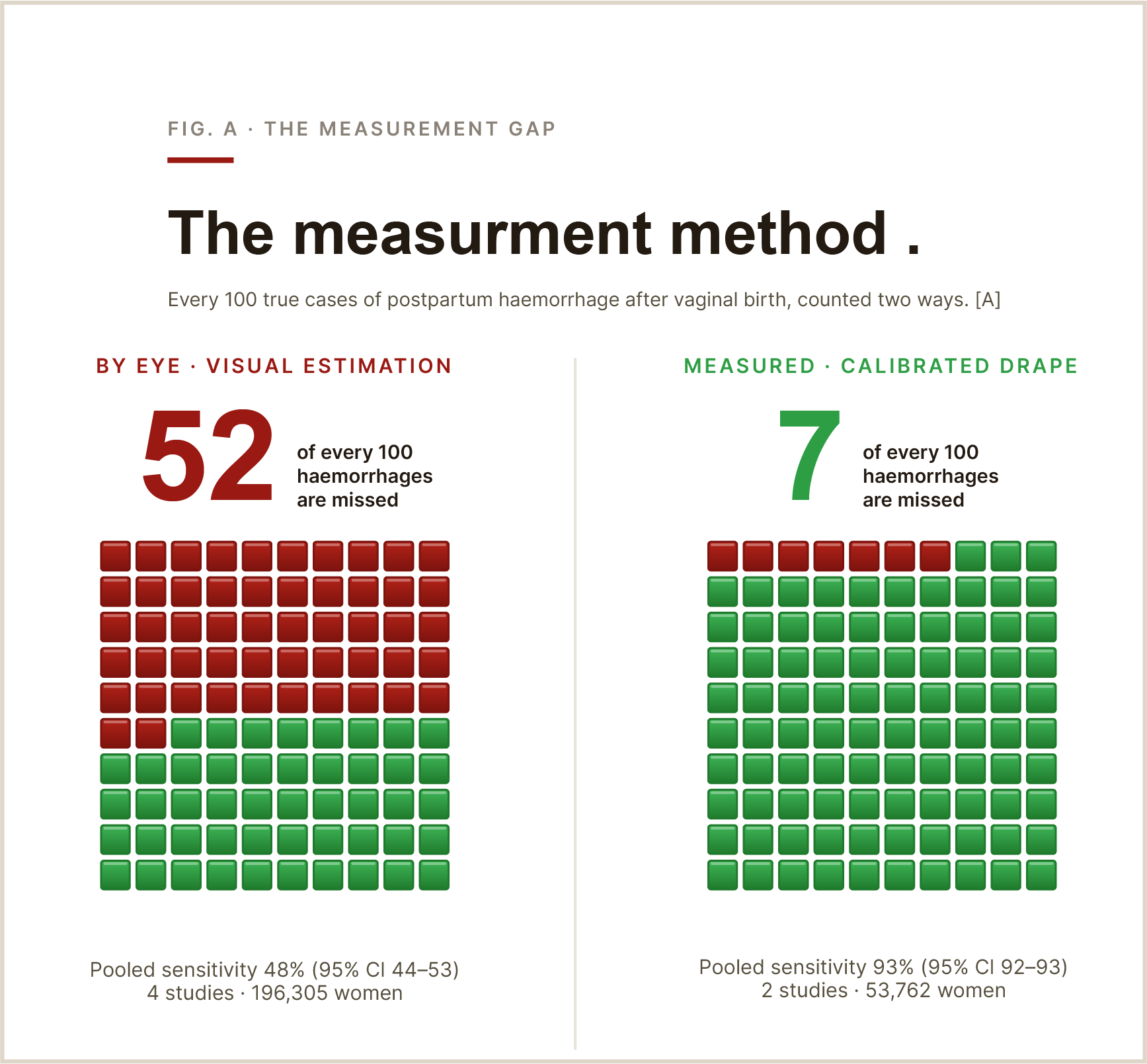
Within minutes of each vaginal birth, a decision is made on whether to begin treatment based on the amount of blood loss. This decision is still based on visually estimated or ‘guesstimated’ blood loss. Diagnostic tools now provide evidence showing how often these visual assessments are incorrect.
The problem with visual estimation
Postpartum haemorrhage is often estimated visually by looking at blood loss on pads, bed linen, and the floor.
Visual estimation of blood loss after vaginal birth fails to identify at least 52 out of 100 true cases of postpartum haemorrhage. Conversely, using a calibrated blood-collection drape combined with abnormal vitals reduces missed cases of postpartum haemorrhage to just 7 out of 100 (sensitivity of 93%) [1].
The limits of visual estimation
01 –Guesstimation
The blood spreads
After a vaginal birth, blood isn’t concentrated in a single area, making it hard to determine the actual amount.
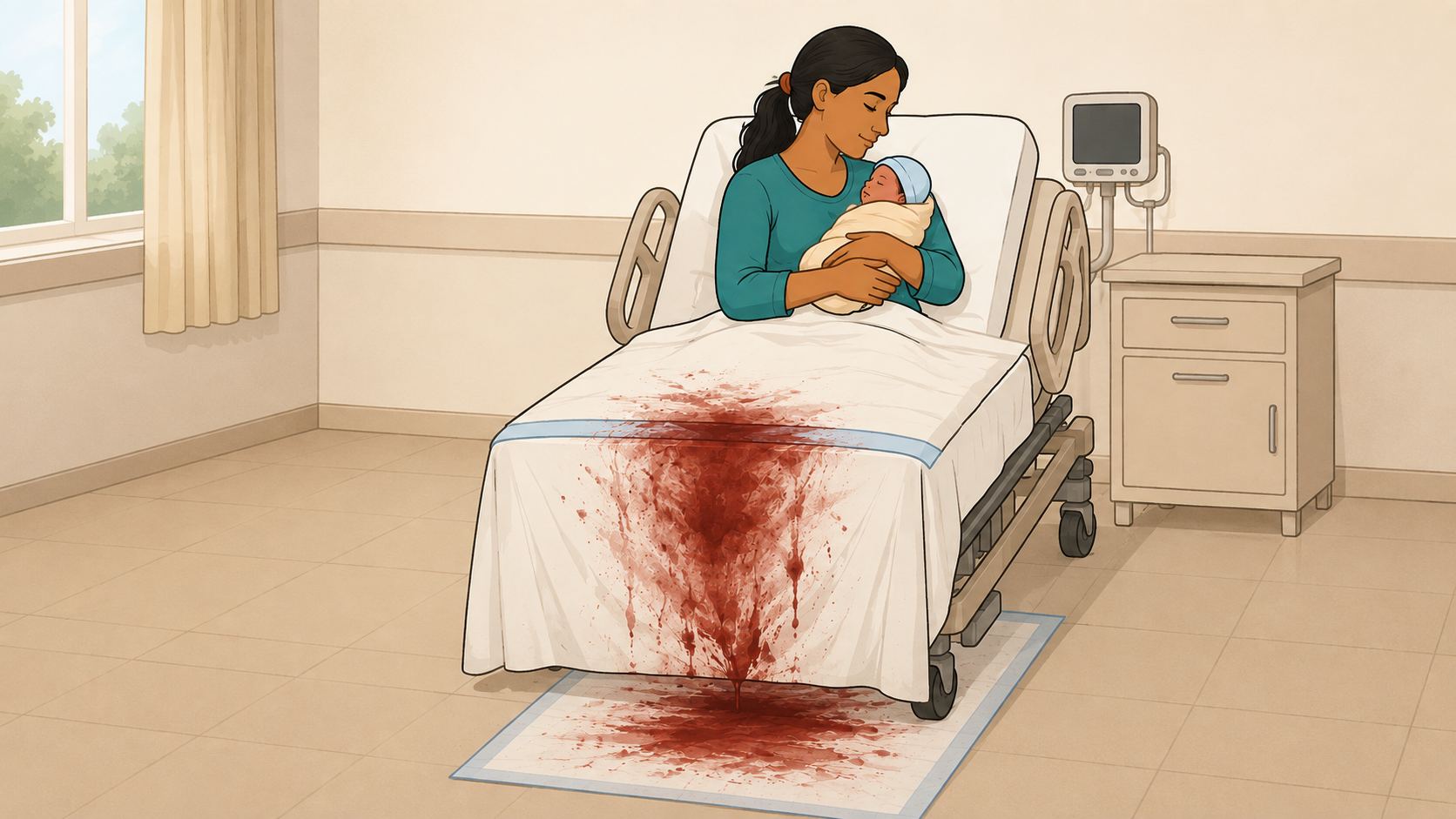
Visual estimation – underestimates blood loss
02 – Inaccuracy
The eye underestimates
Visual estimates tend to underestimate, and inaccuracy increases with greater volume loss: visual estimation detected fewer than 1 in 10 severe haemorrhages [1].
03 – Objectively measuring blood loss is now recommended
Objective blood loss measurement using a calibrated drape improves early PPH diagnosis. It ensures excessive bleeding is recognised promptly, so that women get timely treatment without avoidable delays.
The problem
SUGGESTED · Section title: The problem with the 500 mL threshold
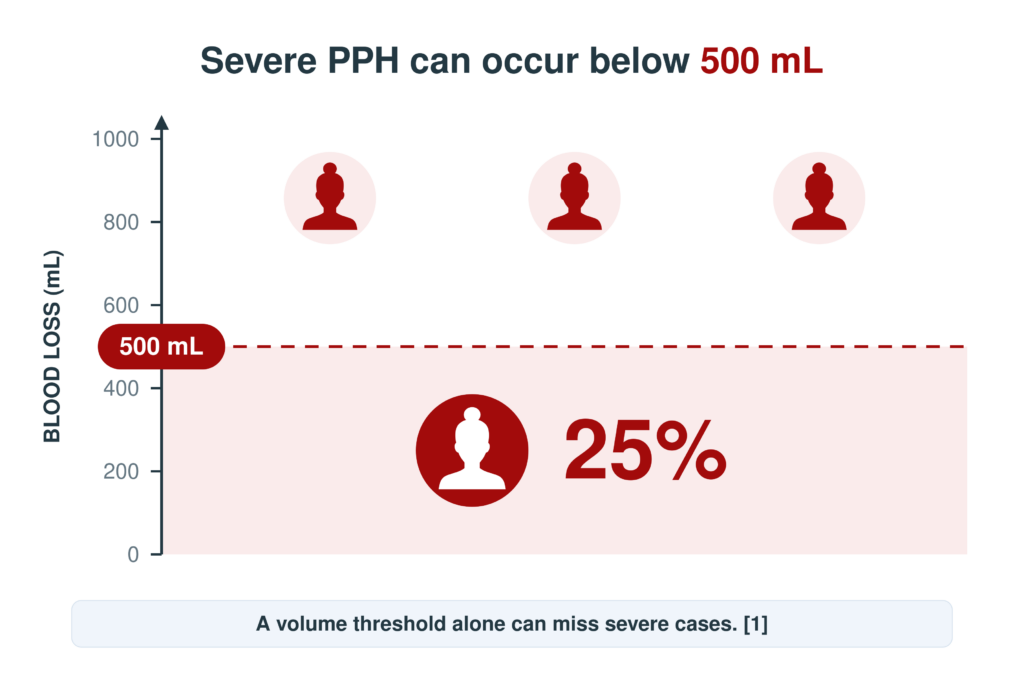
The 500 mL threshold has been the standard for decades, established by convention rather than by scientific evidence [3]. This threshold was applied to all women and has been the standard for decades; however, different women tolerate blood loss differently. A woman with severe anaemia may be compromised even at 300 mL, while women with healthy physiological reserves may tolerate more. A threshold based on volume alone can therefore identify PPH too late [3] [4].
The calibrated blood loss collection drape
01 – Placement
Applied right after birth
A simple, low-cost calibrated drape, applied once amniotic fluid has drained and before placental delivery.
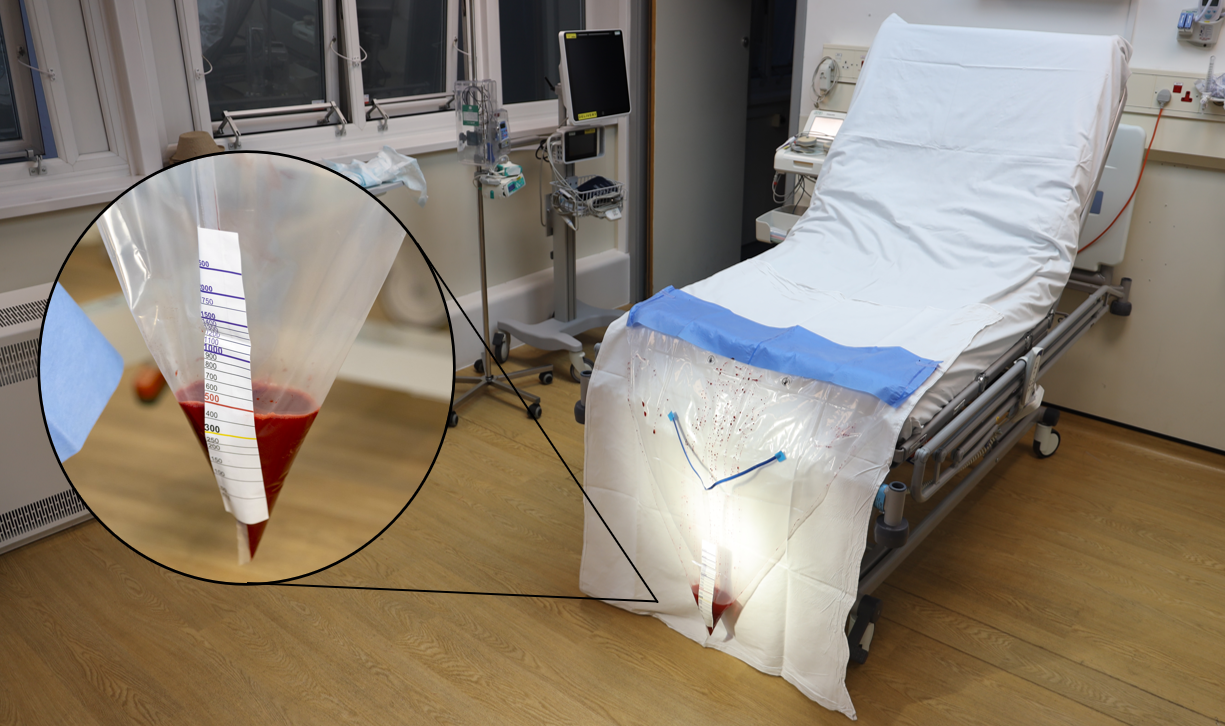
Calibrated drape - the whole team can easily read
In practice · Two illustrative scenarios
Based on E-MOTIVE trial observations
A midwife uses a calibrated drape after every birth.
Two births, two sets of readings, and the same question each time. Is this postpartum haemorrhage? Objective measurement identifies PPH that estimation misses.
Scenario
Estimated
Objectively measured
The call
Scenario 1
≈200 mL
580 mL
PPH
≥500 mL
Treatment triggered by objective measurment
Scenario 2
≈150 mL
400 mL
NOT PPH
≥500 mL
Treatment not triggered
Objective measurement answers the first question after birth: how much blood has been lost.
The next question is: at what threshold is treatment triggered?
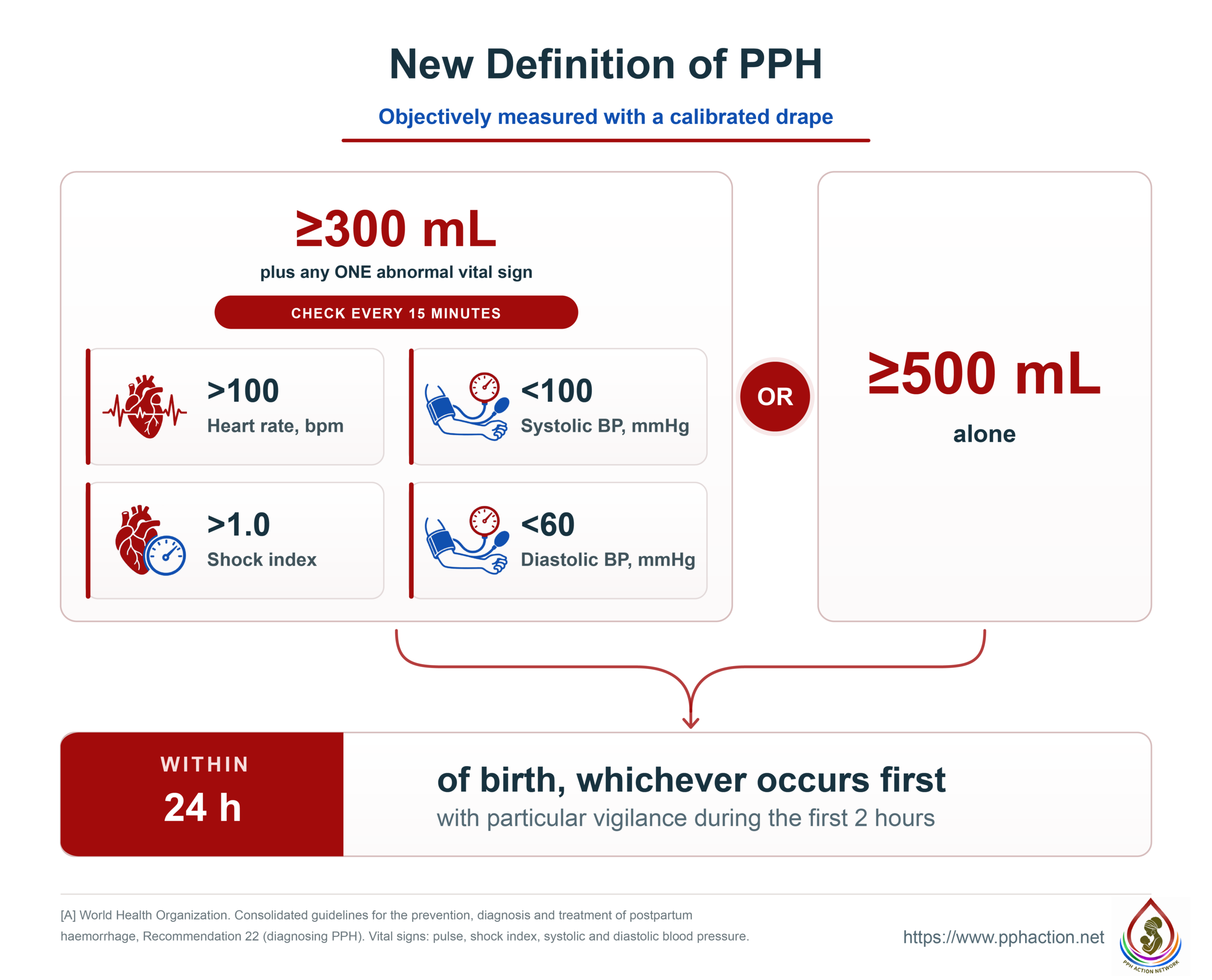
The updated definition of PPH: an action threshold.
For many years, the key question after birth was “has she lost 500 mL yet?” The consolidated WHO–FIGO–ICM guideline for PPH now shifts that focus to a different question: based on her current physiological status, "Is her current blood loss enough to warrant immediate action?" [5]?
The evidence behind it
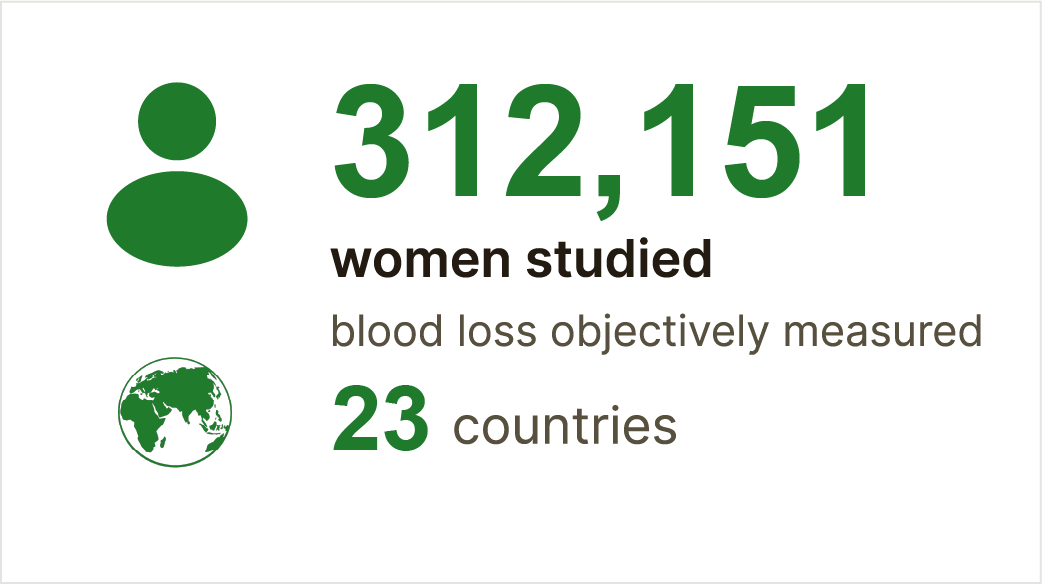
A WHO IPD analysis evaluated objectively measured blood loss and vital signs, individually and in combination, as predictors of maternal death and severe morbidity [2].
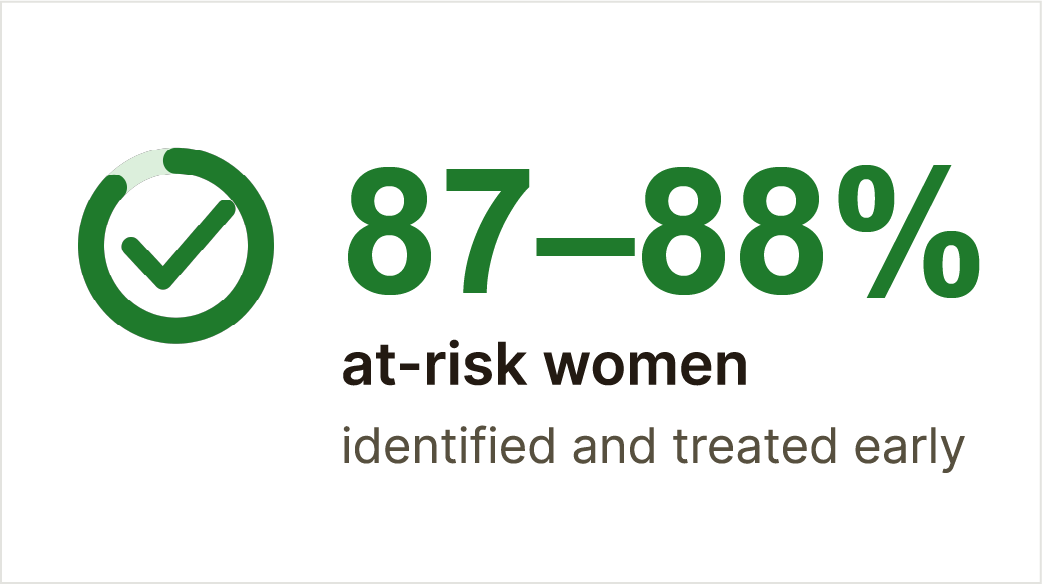
Using a combined criterion of a lower blood-loss threshold (<500 mL; 300–450 mL) with at least one abnormal vital sign, predicted PPH with a sensitivity of 87–88% (the trigger identifies 87–88 out of every 100 women at risk of death or life-threatening complications) and a specificity of 67–76% (for every 100 women who would have recovered without treatment, the trigger treats 24–33 as a precaution).
In practice · Three illustrative scenarios
Based on E-MOTIVE trial observations and the WHO–FIGO–ICM trigger criteria.
A midwife uses a calibrated drape after every birth. Three births, three sets of readings — and the same question each time: is this postpartum haemorrhage?
Scenario
Objectively measured
Her pulse
The call
Scenario 1
580 mL
78 bpm
NORMAL
PPH
≥500 mL
Treatment triggered by volume alone.
Scenario 2
350 mL
118 bpm
ABNORMAL
Scenario 3
400 mL
84 bpm
NORMAL
NO PPH
Below 500 mL, vitals normal
Treatment not triggered. Observe.
What changes when you measure objectively
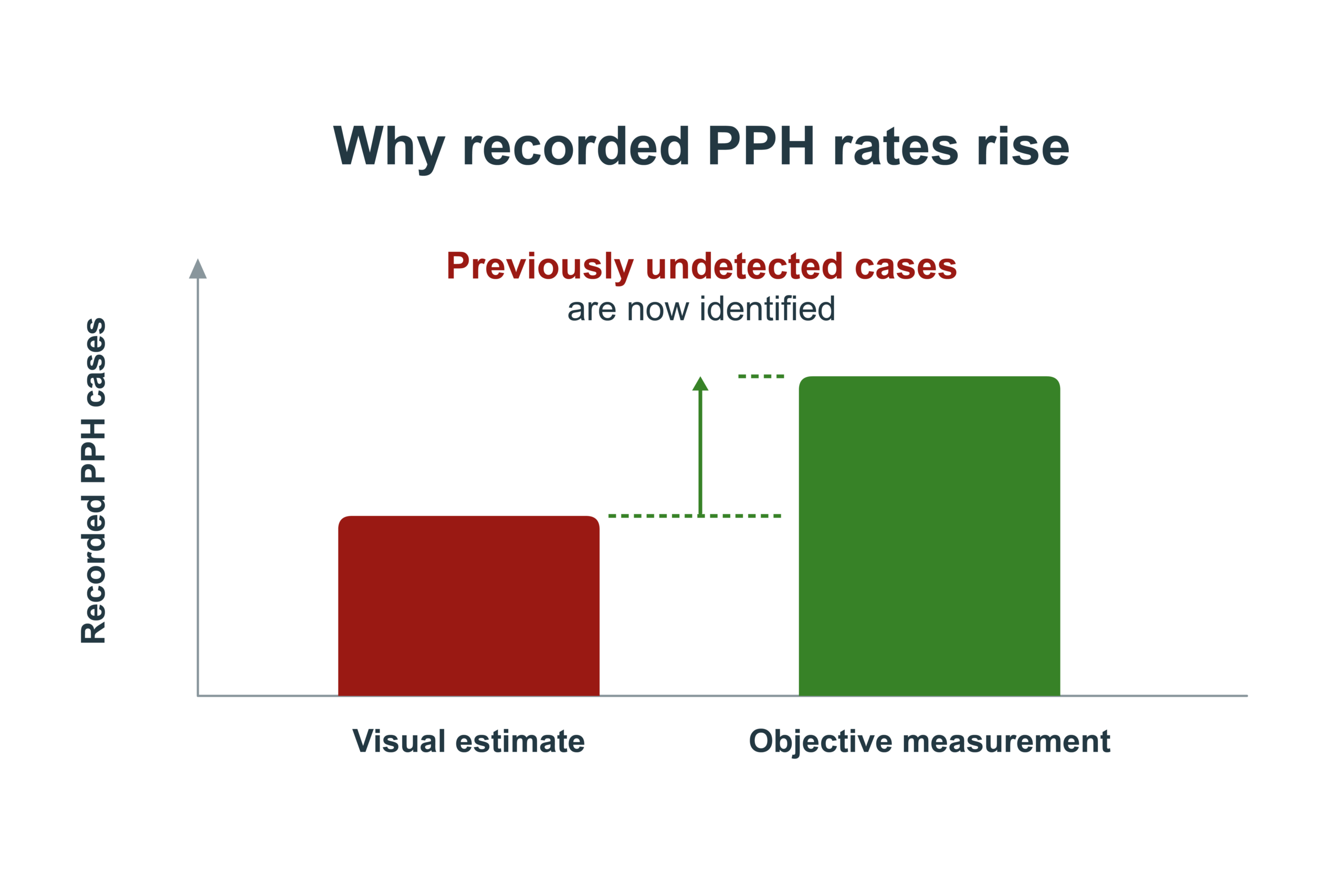
Recorded postpartum haemorrhage rates increase as facilities move from visual estimation to objective measurement of blood loss. This allows previously undetected cases to now be identified, and the rise should be interpreted as better detection. It is important to clearly communicate this to hospital boards, ministries, and media before the first post-implementation audit [3].
The key outcome is not just the recorded rate but the decrease in missed cases of severe postpartum haemorrhage, blood transfusions, laparotomies, hysterectomies, and death due to bleeding.
What it means for healthcare systems
The first response treatment (MOTIVE) is triggered by objectively measured blood loss of 300 mL or more with one abnormal clinical sign or blood loss of greater than 500mL. The WHO now recommends this trigger [4] [6].
In practice, applying this definition involves two key steps:
- objectively measuring blood loss at each birth with a calibrated drape
- ensuring healthcare workers are trained to initiate treatment once the trigger condition is met.
References
[1] Yunas I, Sindhu KN, Devall AJ, et al. Diagnostic accuracy of subjective visual estimation and calibrated blood-collection drapes for postpartum haemorrhage. Cochrane diagnostic test accuracy review, as summarised in [3].