05 · Start Before Birth · Prevention and anaemia
The risk is set
before labour begins.
The previous four pages explained how to respond when a woman haemorrhages. This page focuses on prevention: actions a health system can take prior to a woman entering a labour room.
The problem in brief
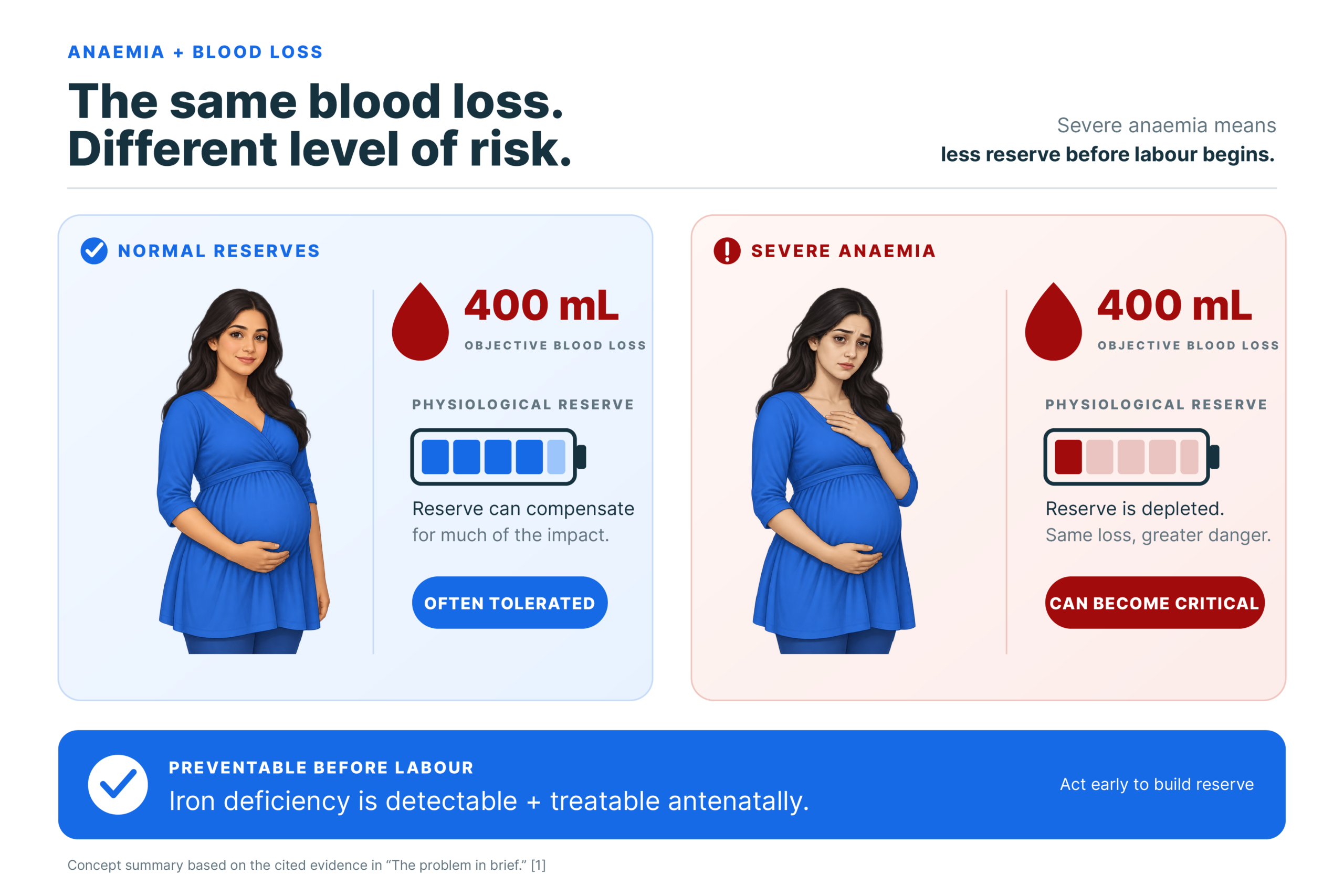
Anaemia influences a woman’s ability to withstand blood loss. This could be due to compensatory increases in cardiac output, placental size and vascularity; reductions in the oxygen carrying capacity of blood, compromising myometrial contractility; and impaired blood clotting [1]. In addition to this, a woman in labour with severe anaemia already starts with diminished reserves. As a result: the average 400 mL blood loss tolerated by a woman with normal reserves can become critical for a woman with severe anaemia.
Most pregnancy-related anaemia is due to iron deficiency, which is detectable and treatable well before labour, making the risks above preventable [1]. This page elaborates how anaemia can be prevented antenatally.
The Risk
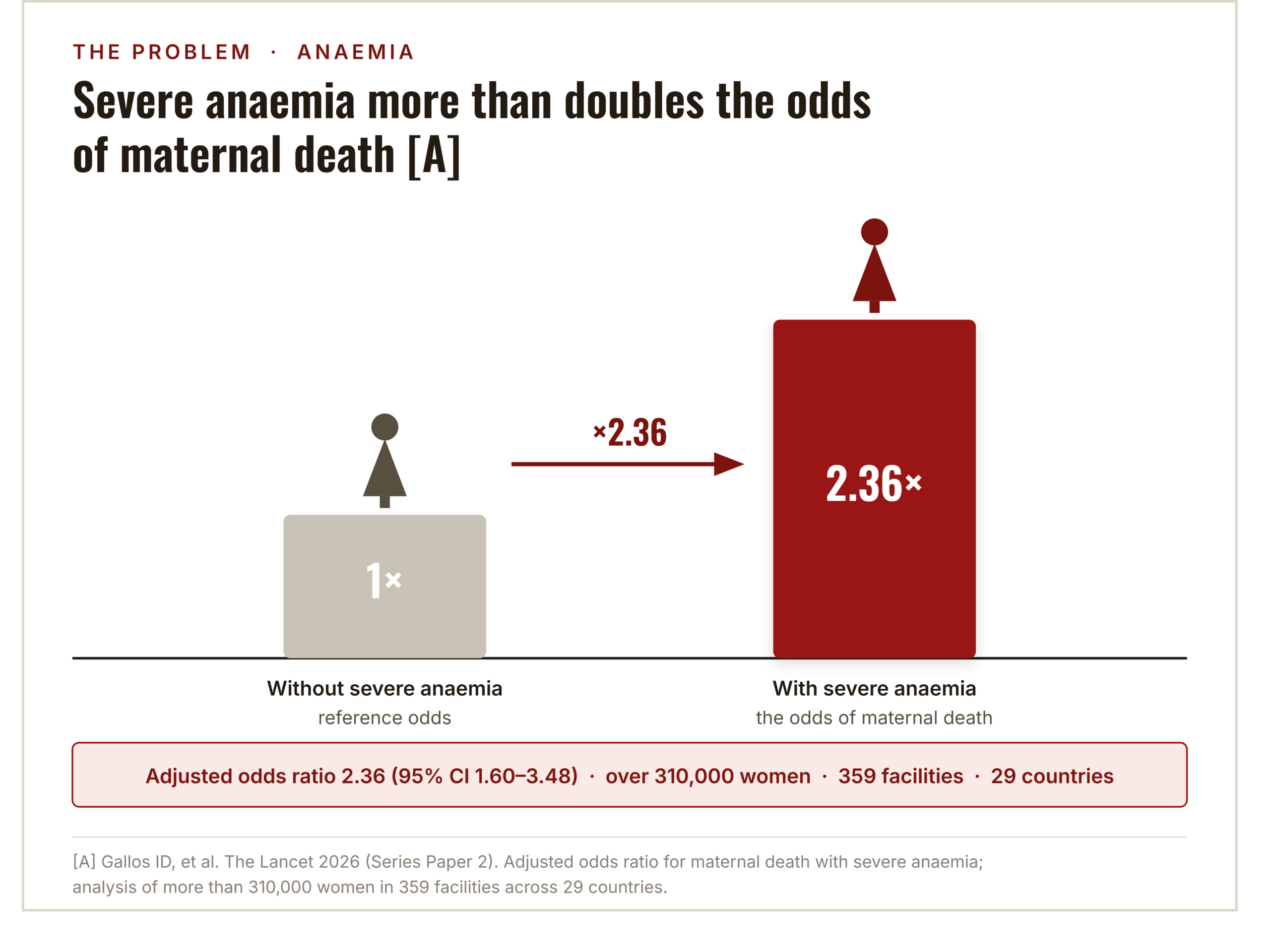
Anaemia increases the risks and effects of postpartum haemorrhage: women with anaemia face a 2.4-fold higher risk of death [1] [4] [5]. For survivors, the relationship does not end there; severe anaemia delays recovery and compounds the risk of future pregnancies [2]. Left unaddressed, the cycle continues throughout a woman’s reproductive life.
The Scale
The Solution
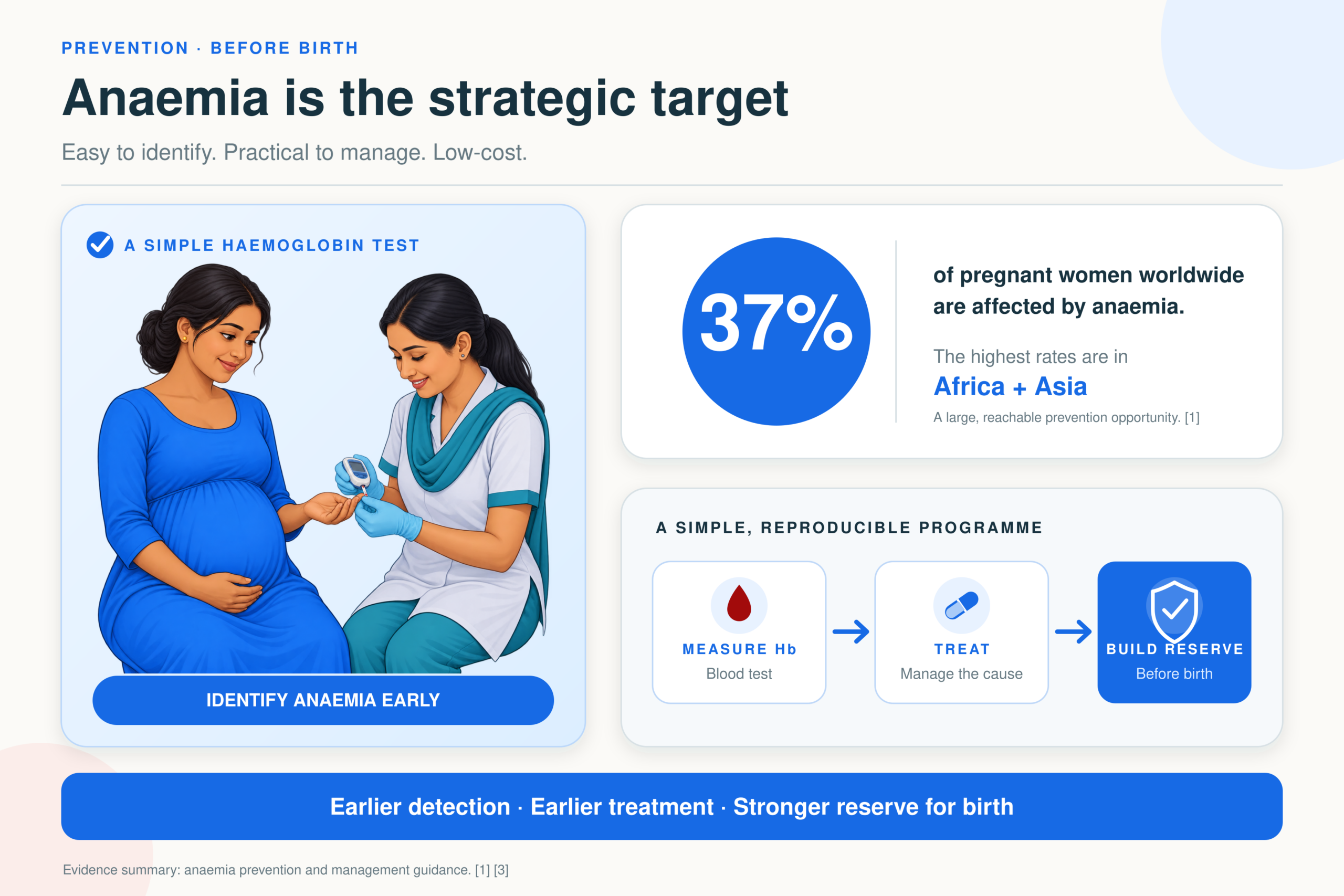
Among all risk factors for postpartum haemorrhage, anaemia holds a key place in guidelines as it can be easily identified and managed at low cost. Detection involves measuring haemoglobin, and treatments for anaemia can include:
The Policy
The consequences of leaving anaemia untreated reach beyond the woman herself, potentially reducing her capacity to work and care for her children [1].
Detecting and treating anaemia is therefore a strong choice for a ministry deciding where its maternal health budget should be directed.
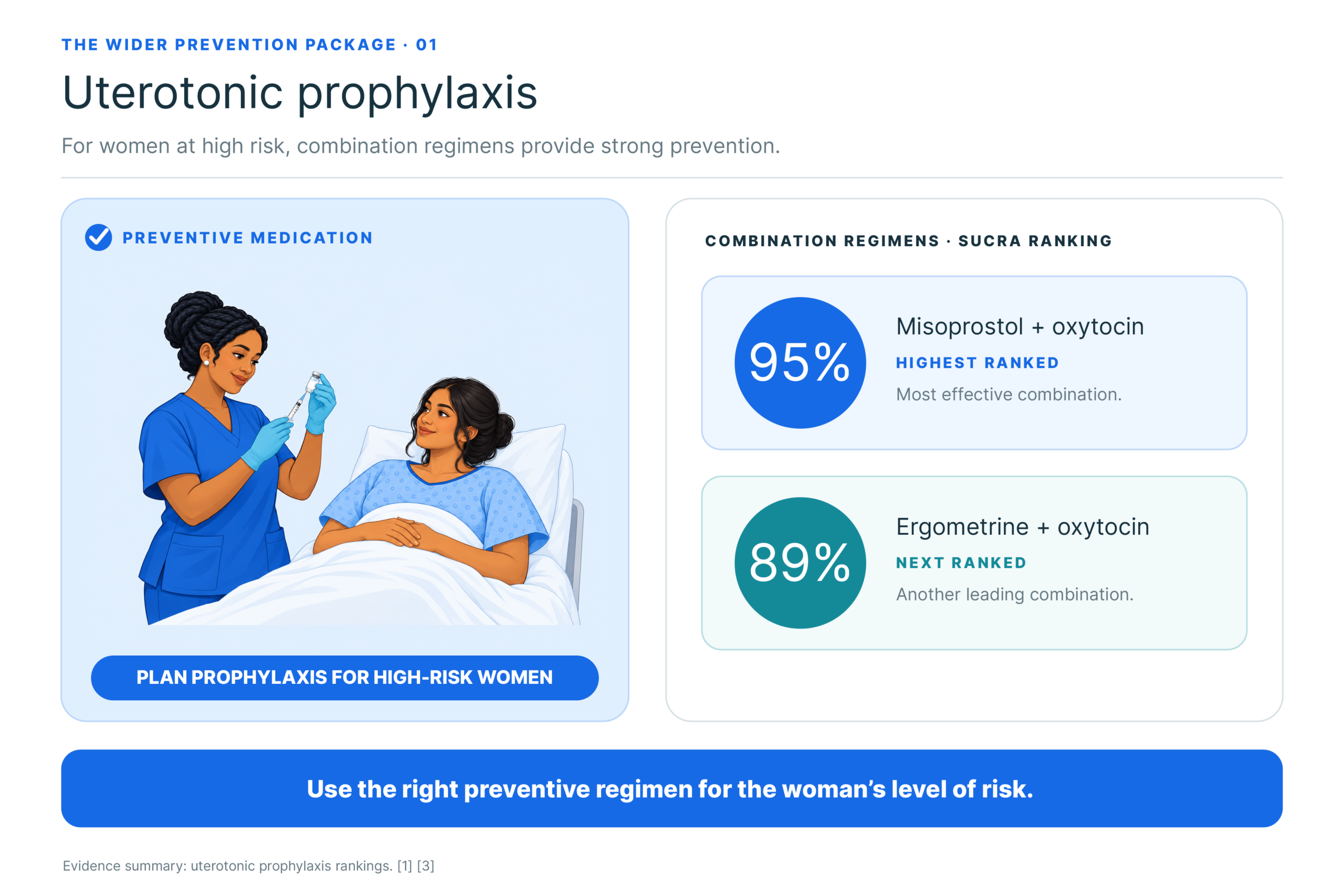
Offer contraception
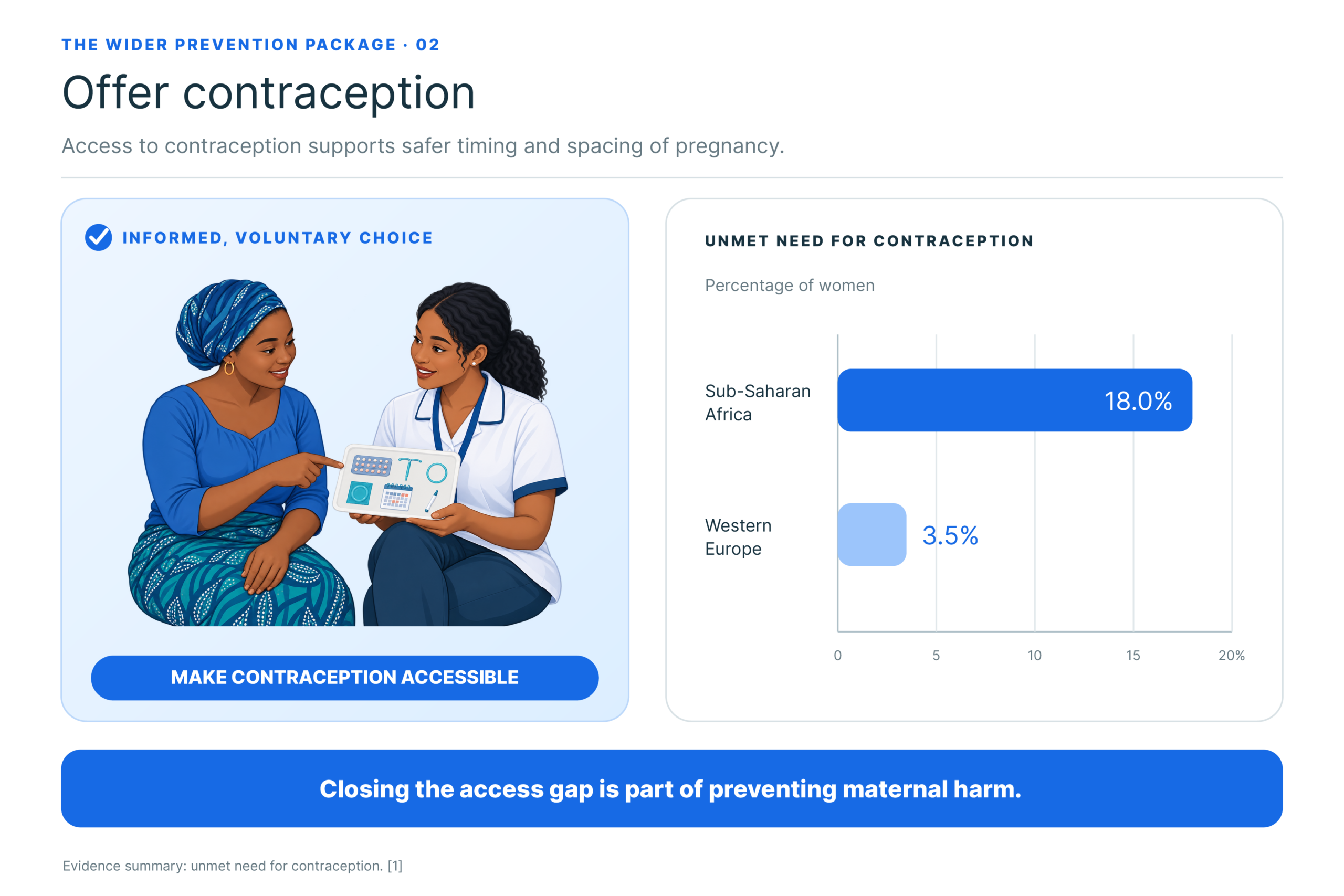
18.0% of women in sub-Saharan Africa face an unmet need for contraception, compared to only 3.5% in western Europe [1].
Avoiding unnecessary caesarean sections
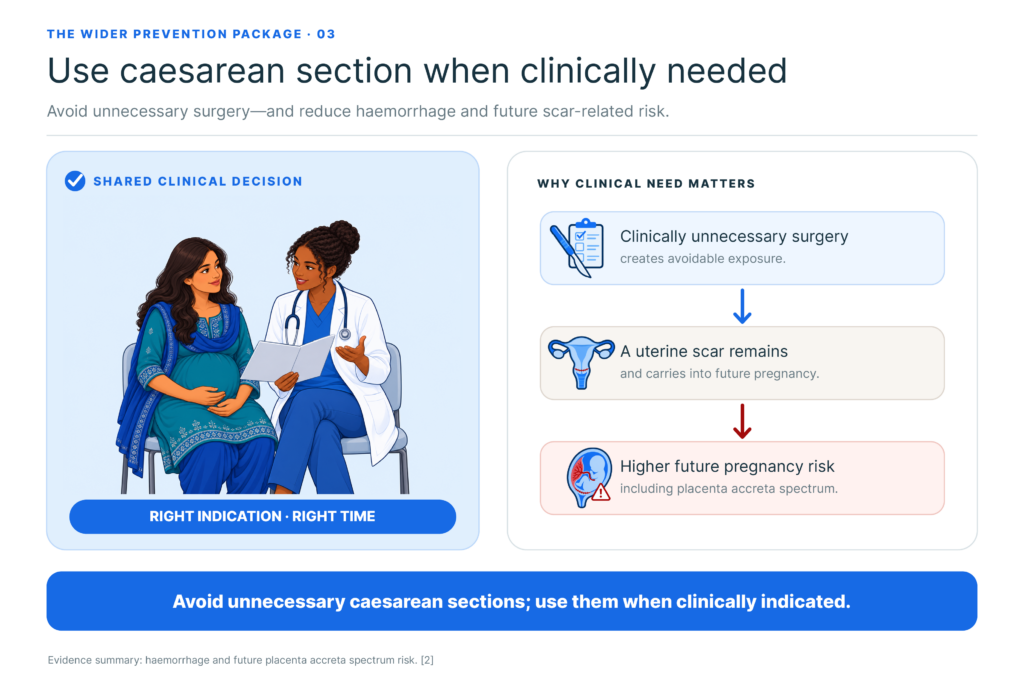
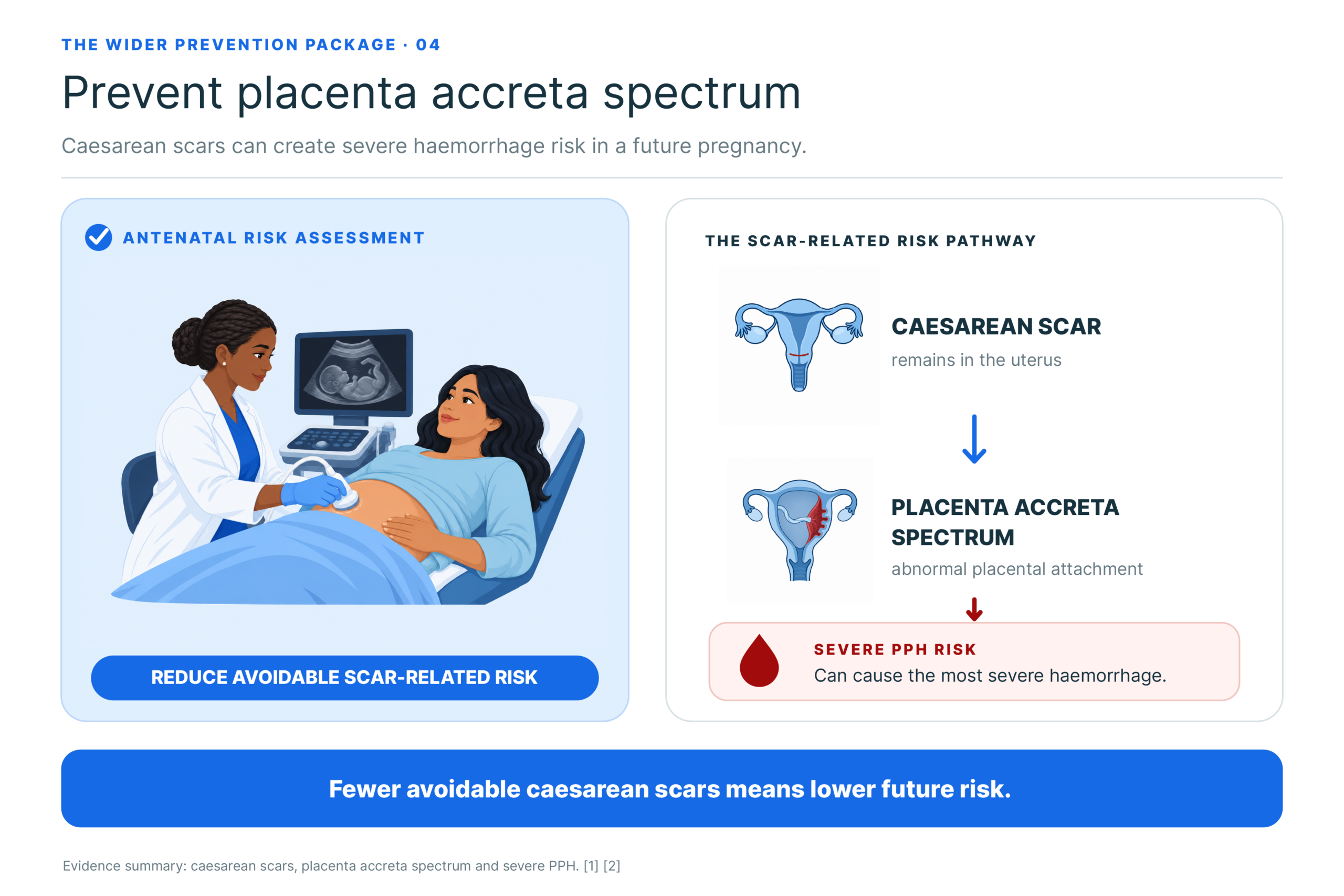
As well as increasing the risk of haemorrhage, caesarean sections increase the risk in future pregnancies of placenta accreta spectrum (abnormal placenta location) [2].
References
[1] Gallos ID, Sindhu KN, Yunas I, et al. Prevention of postpartum haemorrhage: from evidence to implementation at scale. The Lancet, 2026. Paper · DOI
[2] Coomarasamy A, Sindhu KN, Gallos I, et al. Postpartum haemorrhage: epidemiology, consequences, and missed opportunities. The Lancet, 2026. Paper · DOI
[3] WHO, FIGO, ICM. Consolidated guidelines for the prevention, diagnosis and treatment of postpartum haemorrhage, 2025. Paper